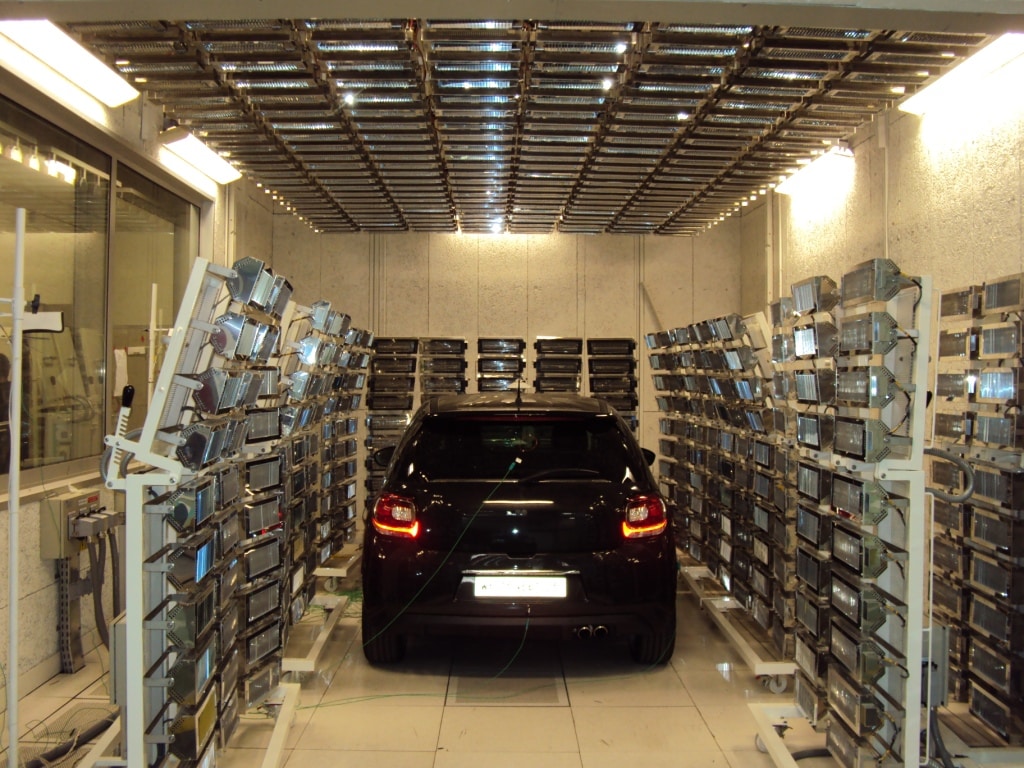
The automotive industry has one obsession: produce faster, with less energy and zero scrap. Whether thermocompressing carpets and interior panels, functionalising battery trays for electric vehicles, or modernising paint lines still running predominantly on hot air, thermal processes are at the heart of competitiveness.
Heating solutions must combine instant reactivity, precise regulation and flexibility to handle a diverse range of parts without ever sacrificing throughput.

Thermal Challenges in
the Automotive Sector

Productivity & Throughput
Saving 10 seconds on a 60-second cycle means a 20% productivity gain. Performance measured and validated under real production conditions.

Energy Control
Low-inertia infrared only consumes energy when a part is being heated. Measured result: energy consumption halved per part produced.

Zero Scrap
Natural fibres, carpets, plastics: a deviation of a few degrees blackens or deforms the part. Multi-zone regulation eliminates scrap caused by heating.

Flexibility & Universality
Door panels, battery trays, painted parts: a well-designed universal line replaces several dedicated lines, with no reconfiguration required.
Thermal Solutions
Designed for Automotive
Applications in Automotive
From OEM paint shops to Tier 1 composite parts: Sopara covers the entire thermal chain in automotive manufacturing.
Case Studies
Case Study 1
Automotive Tier 1 Supplier

The Industrial Challenge
Ageing lines equipped with high-inertia IR limited throughput and could not process fragile materials. The client wanted to modernise existing equipment, standardise on a universal oven and ensure production continuity in the event of a breakdown.
The Solution Implemented
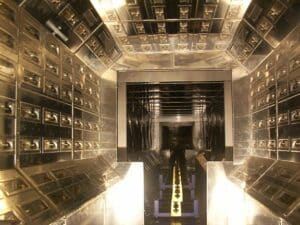
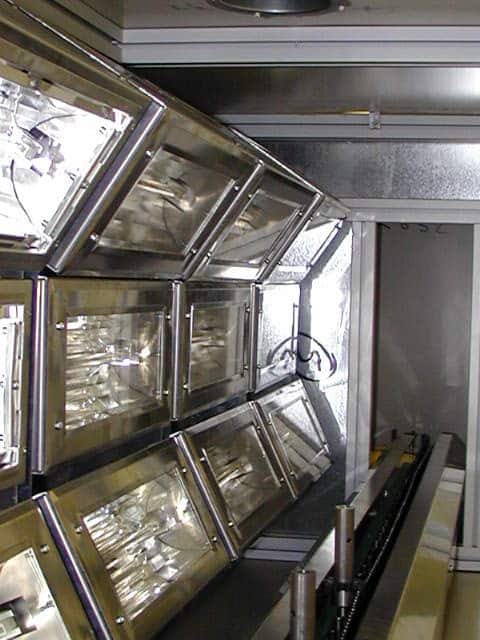
Deployment of double-sided heating, split into 50 zones on 2.5 m × 1.8 m panels, dual-side pyrometry, real-time regulation, cycle logging, Sopara composite protections on lower panels.
The Impact
÷2
Energy consumption per part
+20%
Productivity (10 s saved per 60 s cycle)
Universal oven
All references on a single line
Zero stoppages
Immediate backup if the primary hot-air oven fails
Case Study 2
Automotive Tier 1 Supplier

The Industrial Challenge
The specification called for high-power medium-wave IR (2×65 kW/m²) for door panels and rear shelves in natural fibres. Above 200°C, the fibres blacken and oxidise: high scrap rates and fire risk with the technologies proposed.
The Solution Implemented
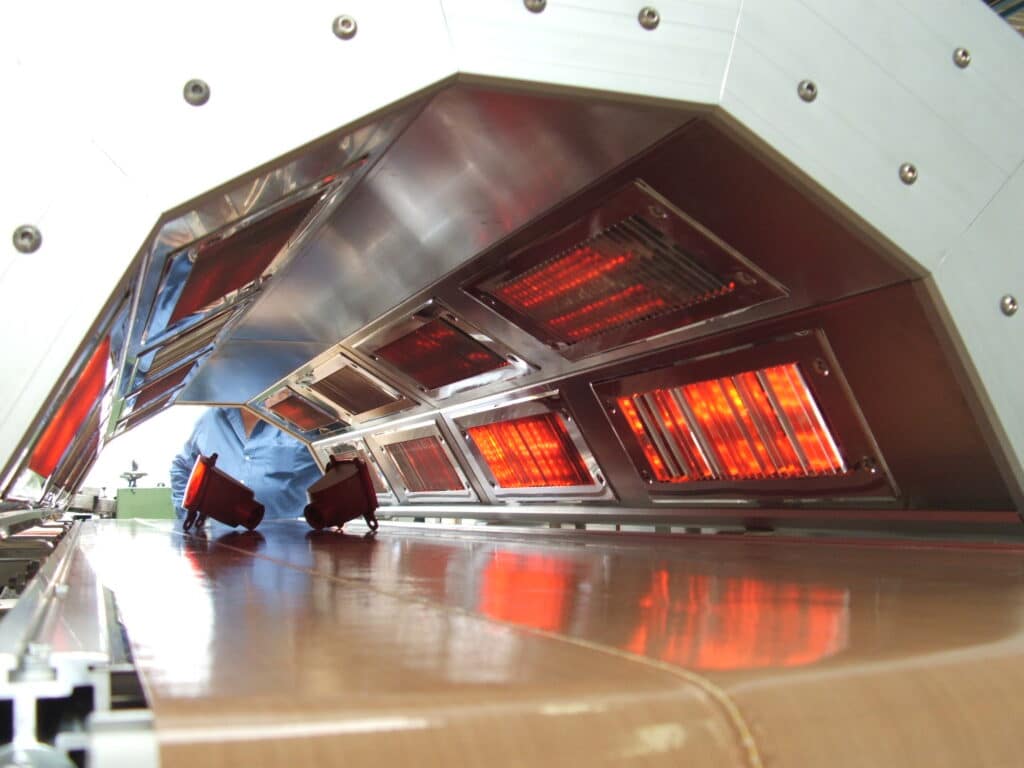
Switch to short-wave IR, power reduced to 2×40 kW/m² (running at 60% of set point). Double-wall mobile panel for continuous heating. 14 regulation loops automatically compensating for absorption differences between the two faces. Full-scale trials at Sopara with a full-power generator.
The Impact
÷2.5
Installed power vs. initial specification
Zero blackening
Natural fibres preserved, zero heating-related scrap
Successful first trial
New two-tone material without changing parameters
2 lines deployed
In production in Mexico, R&D centre replicated in Spain
Credentials & Industrial Deployment
Tier 1 Supplier Ecosystem
Sopara equips the world’s leading automotive Tier 1 suppliers for composite applications, overmoulded parts, hydrogen tanks and natural fibres. Also present at OEMs for body paint shops and assembly-line operations.
Expertise & Testing
Every project starts with trials under real production conditions at Sopara. No installation ships without feasibility proven by measurements. Sopara provides an energy consumption estimate per part before any commitment.
Rigour & Project Methodology
Structured approach: audit of existing lines, trials, pilot phases, industrialisation, team training and predictive maintenance. ISO 9001 certified; modules assembled and tested in-house before delivery.
Frequently Asked Questions
Sopara low-inertia thermal solutions consume energy only during active heating, whereas high-inertia IR systems consume continuously. Measured production gains range from 30 to 50% depending on the application.
Through the combination of short-wave IR (reduced core-to-surface gradient), multi-zone regulation and double-sided heating. On natural fibre-polypropylene materials, automatic regulation compensates for absorption differences between a natural face and a black film, with no parameter changes between production runs.
A universal oven adapts its heating surface and parameters to each product reference. A single line handles the entire product range without reconfiguration. Reference changes are controlled directly from the ThermalCore™ regulation cabinet, without interrupting throughput.
Battery tray functionalisation involves bonding inserts, curing sealing gaskets and polymerising thermoset composite corner brackets. Infrared replaces hot air with cycles divided by five, and the repeatability of each seal is guaranteed by multi-zone regulation. A critical safety requirement for lithium batteries.
Everything starts with trials under real production conditions at Sopara. Sopara provides an energy consumption estimate per part before any commitment and proves feasibility through measurements before any investment decision.
Sopara works on both retrofit of existing equipment and new lines, regardless of the original equipment brand. The approach always begins with a thermal audit of existing installations, a diagnosis of current process limitations, and then a proposal for an optimised solution.
Contact-us